Key takeaways
- Best overall: April-June and September-November – calm seas, dry trails, visibility past 25 m, moderate crowds.
- Busiest: July-August – superb weather but peak prices and full boats; book 2-3 months ahead.
- Quietest: January-February (west monsoon) – trips run with rerouting; green hills and best manta numbers.
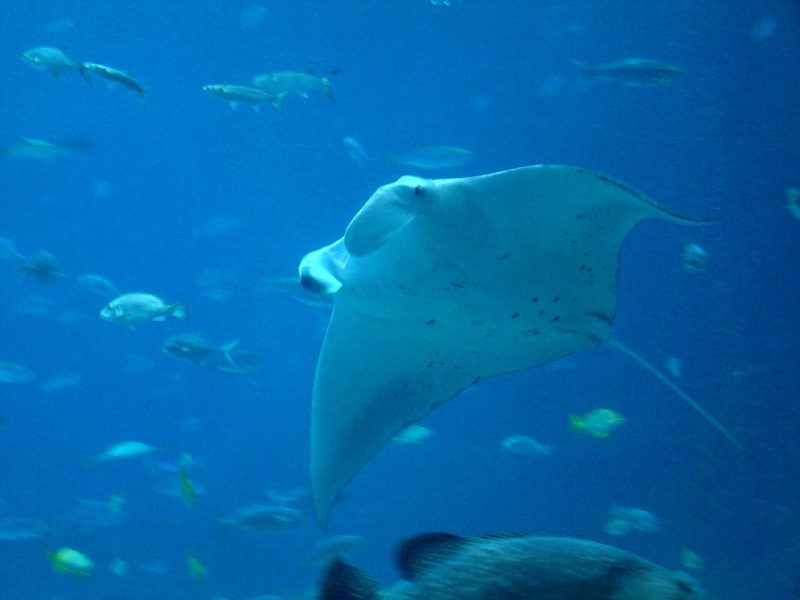
- Manta rays peak December-February at Manta Point; Komodo dragons are seen every month of the year.
“When should we come?” is the first question in almost every WhatsApp conversation we have. The honest answer is that Komodo National Park is a year-round destination with two or three genuinely different personalities — and the right month depends on whether you care most about flat seas, underwater visibility, green hills, manta numbers or empty trails. Our crews sail this park every week of the year. Here is what they would tell a friend.
The short version
- Best overall: April–June and September–November — calm seas, dry trails, excellent visibility, moderate crowds.
- Busiest: July–August — superb weather, peak prices, full boats. Book 2–3 months ahead.
- Quietest: January–February — the west monsoon. Trips run with rerouting; photographers love the green hills.
- Manta peak: December–February at Manta Point, though sightings happen all year.
Best time to visit Komodo, month by month
| Month range | Sea conditions | Wildlife highlights |
|---|---|---|
| December – February | West monsoon; rain in bursts, outer crossings can close for a day | Manta rays peak at Manta Point; dragons more mobile in the mornings |
| March | Seas settle week by week; hills still green | Quiet trails; good green-season photography |
| April – June | Calm seas, visibility past 25 m | Whale sharks off Sumbawa; dragons active; mantas all year |
| July – August | Flat, reliable trade winds (busiest, book ahead) | Dragon mating season; occasional male sparring |
| September – November | Glassy dawns, visibility holds | Dragons highly active pre-mating; whale sharks into October |
December to February — the green season
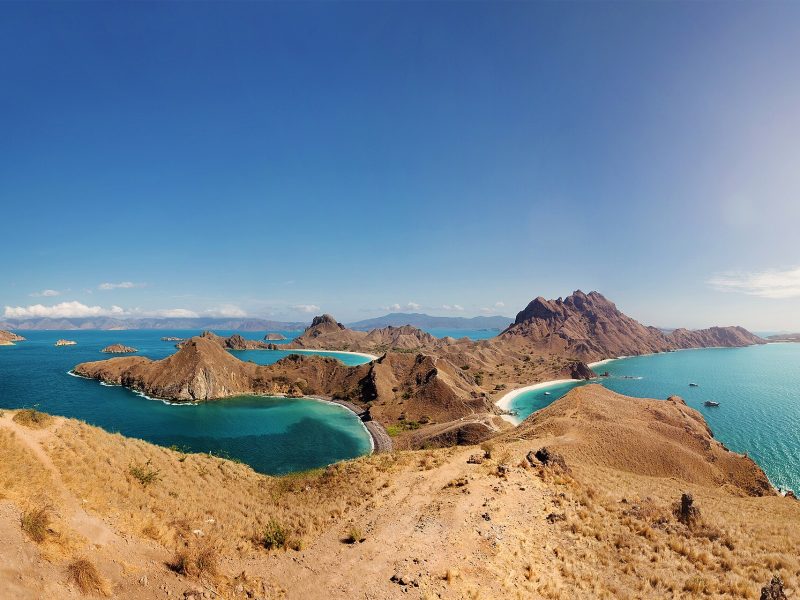
The west monsoon brings rain in bursts (rarely all-day washouts) and a swell that can close the outer crossings for a day at a time. In exchange you get Komodo at its strangest and most beautiful: the savanna hills of Padar and Rinca turn an improbable emerald, the light after storms is ferocious, and plankton blooms pull reef mantas to the cleaning stations in numbers we never see in the dry months. January guests routinely count fifteen or more mantas in a single session. Captains stay flexible; itineraries get reshuffled around weather windows. If your dates are fixed in this season, a liveaboard beats a day boat — sleeping inside the park means you use the calm morning hours that day-trippers spend commuting.
March — the turn
The monsoon loosens its grip. Seas settle week by week, the hills hold their green into early April, and boats are still pleasantly underbooked. A sleeper pick — especially the second half of the month.
April to June — the connoisseur’s window
If we could only sail three months a year, these are the three. The sea flattens, underwater visibility stretches past 25 metres, the trails are dry by sunrise, and the southern hemisphere’s school holidays have not started. May in particular hits a rare balance: golden-but-still-green hills, whale sharks off Sumbawa, and anchorages with two boats instead of twenty. Our Lombok to Komodo 4D3N open trip sails this window with the calmest crossings of the year.
July and August — peak everything
Cloudless skies, 28-degree water and the trade winds at their most reliable. Also: the most boats, the highest prices, and a sunrise queue on Padar. It is still a magnificent time to visit — the park absorbs crowds better than most famous places — but plan like you mean it. Cabins, especially on the flagship KLM Walenreng, sell out 8–12 weeks ahead, and the early-departure advantage of staying overnight in the park matters more than ever.
September to November — the second spring
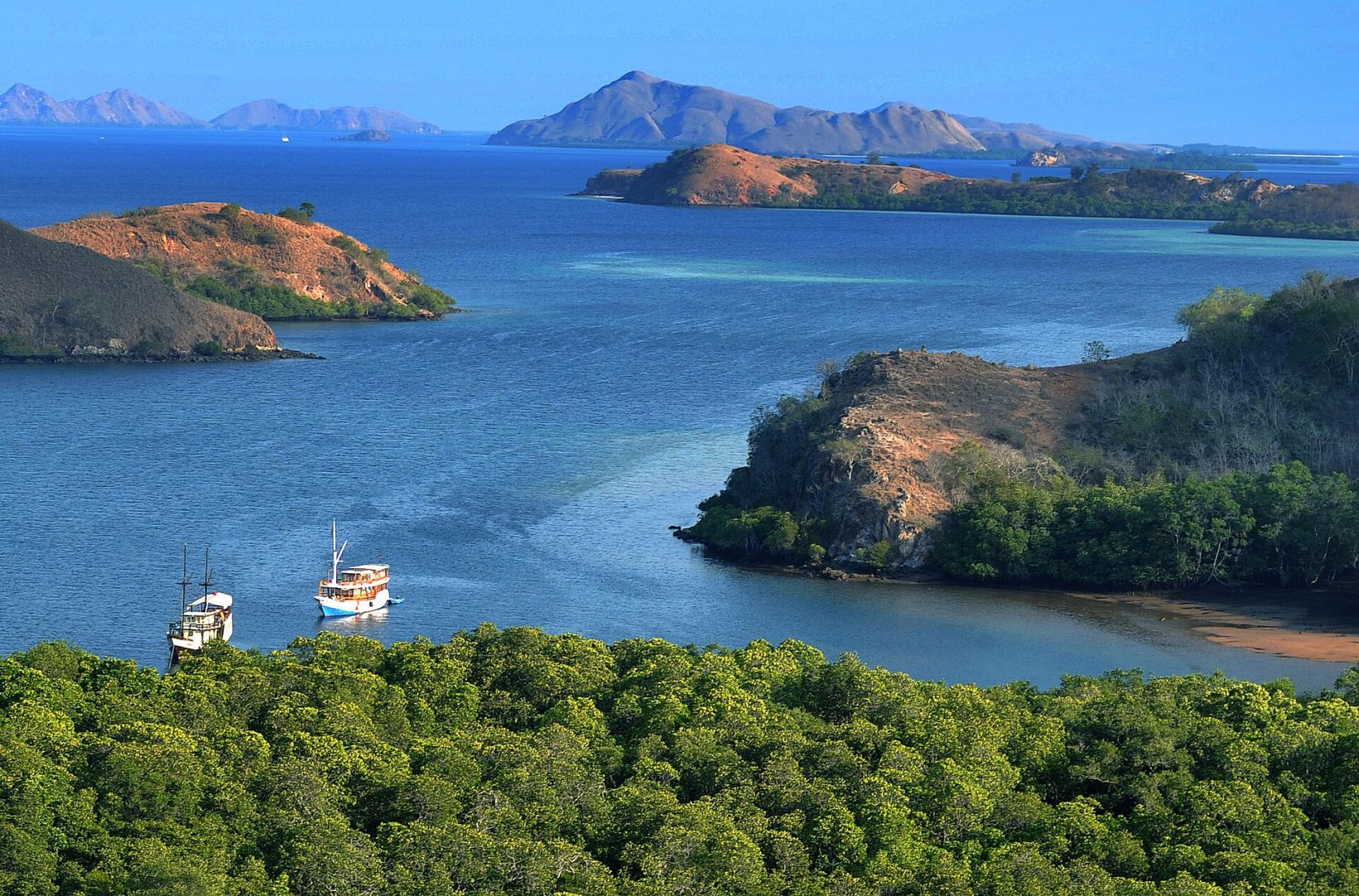
The crowds drain away in the first week of September and the weather barely notices until late November. October might be the single most underrated month: the sea is glassy at dawn, visibility holds, and the dragons are highly active in the run-up to mating season. November adds dramatic cloudscapes and the first cheap-season rates. This is also our favourite stretch for the full Labuan Bajo to Lombok sailing crossing via Sumbawa, Moyo and Satonda — the western legs need settled weather, and they get it.
What about the dragons?
Komodo dragons do not migrate and do not hibernate; you will see them in any month. Behaviour shifts subtly: in the dry season they conserve energy near waterholes and shorelines (easy viewing), while the cooler green season makes them more mobile in the mornings. Mating season around July–August brings occasional sparring between males — dramatic if you are lucky. Ranger walks on Komodo and Rinca run every day of the year.
Sea conditions, honestly
The park sits between two seas, and the straits funnel real current. Crossings to the famous southern and western sites are glassy from April to November and lumpy-to-closed on the worst days of January and February. None of this should scare you off — it just argues for two things: build a buffer day into green-season plans, and book with operators whose captains have the authority to say no. Ours do, and it is non-negotiable.
Our recommendation by traveller type
- First visit, want it all: May, June, September or October.
- Underwater obsessives: January–February for mantas, April–May for visibility.
- Photographers: late February–March for green hills, October for storm light.
- Families: May–June or September — calm water, easy logistics.
- Budget travellers: November and March shoulder rates.
Whenever you land, the route matters as much as the month. Compare our tour packages or message the crew on WhatsApp with your dates — we will tell you exactly what the sea is doing that week, because somebody from our team is out there on it.